

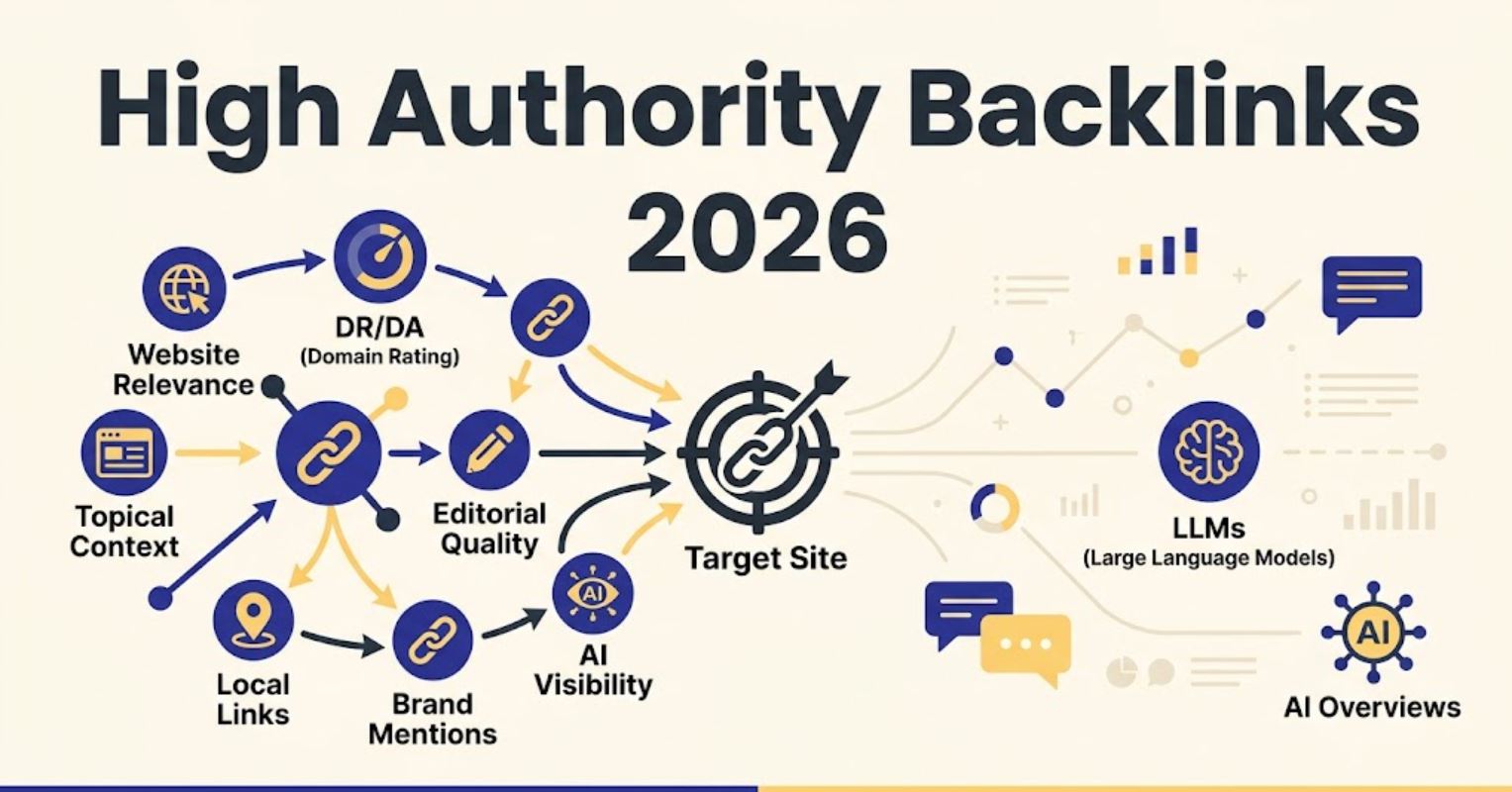
For years, high-authority backlinks have been one of the strongest ranking signals in SEO. A backlink from a trusted website could improve your rankings, increase your domain authority, and drive qualified referral traffic.
Traditionally, high-authority links were judged by metrics such as Domain Rating, Domain Authority, organic traffic, spam score, and the overall quality of the referring website. If you earned a backlink from an industry leader like Men’s Journal or Bodybuilding.com, it was considered a major SEO win.
Today, search has evolved. With the rise of AI Overviews and large language models, earning backlinks is no longer just about increasing rankings in traditional search results. Businesses also want to be recognised as trusted sources that AI systems can cite and recommend.
As a result, the qualities that make a backlink valuable have expanded beyond authority metrics alone. Relevance, editorial trust, brand mentions, and topical context now play an increasingly important role alongside traditional SEO signals.
In this guide, I’ll explain what makes a high-authority backlink in 2026, how AI has influenced link building, and the most effective ways to earn links that support both search rankings and AI visibility.
Key Takeaways
- Relevance is more important than DR alone.
- Editorial backlinks outperform easily replicated paid links.
- Brand mentions help AI visibility.
- Use a mix of HARO, Digital PR, niche edits, and competitor outreach.
- Avoid spammy or irrelevant websites.
The Definition of a High Authority Link in 2026
A high-authority backlink is a link from a trusted, relevant website that passes credibility, topical relevance, and authority to your business.
In simple words, a high authority link is a backlink from a domain to your business website that is trusted by Google and LLMs. That trust is influenced by numerous signals, including relevance, editorial quality, authority, topical context, and user trust.
Here are elements of a high authority link:
1- Website Relevance
A backlink from a website relevant to your business niche is better than an authority link from a high DR website.
I will prefer a link from a relevant DR 20 website over a non-relevant DR 50 website. The reason is that a backlink from a domain operating in your business niche will pass on relevant traffic and link equity in comparison with other options.
For example, an authority backlink from a website about homes, apartments, etc., is great for a real estate business in comparison with a link from a news site. However, if you can get a high DR and relevant link for the real estate business site, like from Realtor.com, that will be ideal and easily qualify as a high authority link.
2- DR/DA
The domain rating by Ahrefs, AS by Semrush, and DA by Moz determine the authority of a website. This is determined by the quantity and quality of backlinks the website has built over the years.
Getting a link from a high DR/DA site is always preferred by the SEO community, and it helps in improving your SEO and rankings.
However, in 2026, people are getting smarter and check the keywords and traffic countries after the DR. This is to check whether the website has a genuine DR or has increased it with spammy domains.
To put things in perspective. Don’t go only after high DR sites; check their backlink profile, referring domains, number of keywords, traffic countries, etc.
3- Link Placement & Anchor Text
The placement defines the quality and authority of the backlink. A link placed in the content has more authority over links in images or other media. Secondly, the anchor text signals search engines what the page is about and which keywords are suitable to rank this page.
Always get your link placed within the content, on relevant anchors. Irrelevant anchor text and badly placed links can lose the link equity and effects.
4- The Topic/Page Relevance
Another factor contributing to the quality of an authority backlink is the topical relevance. The page, or in most cases the blog/article, should be relevant to your business. This is one of the top-ranking factors in LLM and AI engines like ChatGPT, Claude, etc.
A perfume brand should ideally be linked to a topic about perfumes, or something related to fragrances. Not about lifestyle improvement or clothing.
We were able to secure a link for an American CCTV brand from a relevant article on Homes & Gardens. The topic was how home security has evolved with new AI products, which is relevant to the client operating in the CCTV home security niche.
The website is premium and high authority, the topic is super relevant to the business, and the link is dofollow, all three boxes checked for a high authority backlink. Here is the complete case study.
5- Local Links
Local links are gold for local SEO, and if you want to rank in a specific city or location. These links also help in improving your Google business profile ranking, placing your business in the top three map pack.
A local hair salon in New York will benefit more with a local link from a local news site or publication rather than a link from a national news site.
How AI Determines the Authority of a Link
The evaluation process of a link slightly differs from that of traditional search engines. There are a few more factors that determine whether your website/page gets cited in LLMs.
1- Brand Mentions
A recent study by Ahrefs tells us that brand mentions correlate with AI overview visibility. They analyzed 75000 brands and found that brand mentions and branded links have a direct impact on AI visibility.
However, that does not mean link building is obsolete; it still has an impact on search ranking and AI citations. However, what we can learn from the Ahrefs case study is that having links on branded anchors can have a positive impact on your brand’s AI search visibility, and the link is considered a high authority backlink.
2- Editorial Placements
Over the years, AI systems have learned to differentiate between genuine editorial placements and forced links. Links from real websites and publications are regarded as high authority backlinks by AI and LLMs and often cite brands with a mix of these links.
The system can differentiate between websites with real staff, publishing history, and websites that just publish content on anything and everything. A link from Forbes will have more authority than a backlink from an unknown news site.
3- Listicles
Getting your brand featured in third-party listicles has shown great results. We’ve observed that brands consistently featured near the top of reputable industry listicles are more likely to appear in AI-generated recommendations.
This is the reason many brands are investing heavily in listicle guest posts, placing them as the best service or product.
However, the topic should be super relevant to your business or offerings. For example, an AI tool for messaging should be placed in the list of “best AI tools for messaging or best automated messaging service.”
4- Consistency
Consistency matters the most in AI overviews and citations. A one-off press mention won’t move the needle, because AI citations require continuous mentions on high authority and independent websites. Each placement adds a vote of positivity, and your brand becomes recognizable over time.
How to get Backlinks from High Authority Sites?
There are a few ways to get high-authority backlinks for your brand. I have tried them all and listed them as per their effect on rankings and AI overview citations.
| Link Type | Google SEO | AI Visibility | Difficulty |
|---|---|---|---|
| HARO | ⭐⭐⭐⭐⭐ | ⭐⭐⭐⭐⭐ | High |
| Digital PR | ⭐⭐⭐⭐⭐ | ⭐⭐⭐⭐⭐ | Very High |
| Niche Edits | ⭐⭐⭐⭐ | ⭐⭐⭐ | Medium |
| Guest Posts | ⭐⭐⭐ | ⭐⭐ | Easy |
1- HARO/Qwoted Link Building
This is one of the most effective ways of getting your brand and business mentioned on top-tier websites and publications. The links are often from premium websites like Forbes, NYTimes, WSJ, etc.
We specialize in providing premium and high authority backlinks to clients leveraging these platforms. Our Qwoted link-building service scored six high DR links for a home decor client from relevant websites and super-relevant topics. Here is the complete case study.
The best way to get these editorial high authority backlinks is by hiring an agency that specializes in this type of service. Hire us and get featured on high authority websites and publications.
Or you can do it yourself. Sign up on HARO or Qwoted, establish a profile by adding details, and start answering relevant journalist queries. But this will take a lot of your time and effort; therefore, it’s advised to hire an expert to do it for you.
2- Competitor Link Analysis
The second most effective option is competitor link analysis and outreach. Check which of your competitors often appear in AI overviews on queries relevant to your business.
Get an Ahrefs or Semrush account to check their backlink profile, and shortlist only good websites. Start reaching out to them and see which ones are interested in adding your link.
Most of the webmasters will ask for an editorial fee to add your link, which is perfectly fine, and this is how the web economy works.
I would recommend saving time and effort by hiring an expert agency like HAROlinked. We have all the necessary tools for competitor link analysis and outreach.
3- Digital PR
HARO links and digital PR links often overlap, but there is a difference between them. In digital PR, you present newsworthy angles related to your business to journalists to get featured on news sites and publications.
Whereas on journalist outreach platforms like HARO and Qwoted, you provide journalists with an expert opinion related to your business or services.
Links earned via digital PR are top-tier and have high SEO value. However, the process is complicated, and there is no guarantee of a placement. Read more on why citation grade digital PR links are best for AI overviews and rankings.
4- Blogger Outreach
This is one of the oldest techniques to get high authority links for your brand. You find a bunch of bloggers and influencers in your business niche and ask them to link to your business website. They might ask for an editorial fee, which is how they run the website.
Blogger outreach is best when you are selling products like clothes, makeup, shoes, home decor items, etc. However, I have seen service businesses like law firms, payment platforms, etc., using this technique to earn high authority backlinks.
5- Link Magnets
Build informative and well researched contnet pieces around the services and products you sell online. Editors often link to research backed by numbers and data.
For example, if you operate in the real estate sector, write a data-backed research paper on topics like housing price increase in US cities or anything like the effect of crime rate on housing price.
Editors and writers want research-backed data to support their content, and they will link to your research work if it’s backed by numbers.
6- Niche Edits
Niche edits, also known as link insertions, are when you find a relevant blog ranking on Google or ChatGPT and ask it to link to your website.
These are high authority links because they are coming from pages and blogs that are already ranked on search engines and LLMs. Adding your homepage/service page to it will pass on the authority and relevance. It can make the AI system rank your service page in AI overviews, and search engines can rank your websites higher on relevant keywords.
To get backlinks from high authority websites, I would recommend creating a link-building strategy with a mix of journalist outreach, digital PR, niche edits, and competitor link analysis. You can hire us to get a fully managed link-building plan for free.
What Types of Links to Avoid?
All that shines is not gold. Similarly, not all links coming from high DR sites are worth it and sometimes can negatively impact your online visibility.
There are a few types of links I want you to avoid.
1- Guest Posts: Use Them Strategically
Guest posts remain a valuable way to build your website’s authority, especially when they are published on relevant, reputable websites with genuine audiences. They can help establish your brand, earn referral traffic, and strengthen your backlink profile.
However, many websites now openly sell guest post placements, making these opportunities available to anyone willing to pay. Because your competitors can often acquire links from the same sites, guest posts alone may not provide a lasting competitive advantage.
We recommend using guest posts as part of a broader link-building strategy rather than relying on them exclusively. Combining high-quality guest posts with editorial links earned through HARO, Qwoted, digital PR, and niche edits can help build a more natural backlink profile and strengthen your brand’s visibility across both traditional search engines and AI-powered search experiences.
2- Irrelevant Websites
Links from irrelevant websites are fine to build basic domain authority, but they won’t move the needle when ranking on relevant keywords with business intent and getting cited in AI answers.
Keep your links super relevant to your business and offerings. Backlinks from irrelevant websites can negatively impact your overall SEO and AI visibility.
An example of an irrelevant backlink can be a backlink from a local Phoenix news site with low DR, linking to a gym website in Texas.
3- Websites with Low Traffic
Websites with traffic between 100 and 1000 visitors are not a good option for getting links. These may have been hit with a Google penalty, or the content quality is low, which is the reason Google does not rank them high in SERPs.
When building high authority backlinks for clients, I always check the traffic, keywords, and traffic country of the websites before shortlisting them for outreach. In some cases, the traffic is good, but it’s coming from India or Bangladesh, on irrelevant or spammy keywords.
I avoid any websites with under 1000 visits per month, as per Ahrefs, and websites with irrelevant keywords and traffic coming from third-world countries.
4- PBNs and Link Farms
PBNs and link farms are websites owned and operated by a single entity. You won’t be able to recognize a PBN site on your own because it requires experience in analyzing websites and checking patterns common in link farms.
The purpose of these sites is to sell links and guest posts. They will post any type of content from law firms to plumbers; they don’t care about their site’s reputation.
Google has been penalizing these types of websites since 2023. The helpful content update and its improved versions have decimated the traffic and authority of these websites. Still, a business owner with no experience in analyzing websites can pay for these types of links.
5- Websites with AI-Generated Content
After the AI revolution, I have seen many websites that are built on expired domains. The design, content, and everything else are done with the help of AI. The website is there to publish rehashed content on a daily basis.
Avoid these websites at any cost. A backlink from these sites can have a negative effect on your search rankings and AI visibility.
How HAROLinked Helps You Earn High-Authority Backlinks
At HAROLinked, our team has years of experience in link building and digital PR. We specialise in securing high-authority backlinks through HARO and Qwoted while also offering niche edits, listicles, competitor backlink analysis, and other white-hat link-building strategies.
Unlike traditional agencies, we don’t lock you into monthly retainers. You only pay for successful placements, making our service transparent and cost-effective. We also provide a free competitor backlink analysis to identify opportunities your competitors are already using.
Ready to grow your authority with high-quality backlinks? Contact us today to schedule a free link-building strategy call.